A Steel Pedestrian Gate Is Often Overlooked. Most security planning focuses on the main entrance. Homeowners upgrade the driveway gate, add palisade fencing along the boundary, and install cameras at the front. However, the side gate or back access point often gets left behind. People still use it every single day.
That gap matters. A steel pedestrian gate protects one of your property’s most frequently used access points. Yet it’s also one of the most commonly neglected. At Raptor Palisade Fencing, we build custom steel pedestrian gates for daily use, durability, and real security. Every entry point on your property gets the same level of protection.
Why a Steel Pedestrian Gate Deserves More Attention
A pedestrian gate isn’t just a smaller version of your main gate. It faces different demands and different risks:
- Daily wear — unlike a vehicle gate used a few times a day, a pedestrian gate often opens and closes dozens of times. It needs hinges, latches, and a frame built for constant use.
- A common blind spot — side and back gates sit away from the main entrance. Intruders often target them precisely because they’re less visible and less secured.
- Mismatched security levels — a strong main gate paired with a flimsy pedestrian gate creates an obvious weak point. It doesn’t matter how much you’ve invested elsewhere.
- Everyday convenience — for deliveries, staff, or family members who don’t need full vehicle access, a dedicated pedestrian gate keeps the main gate reserved for vehicles only.
For these reasons, we treat every steel pedestrian gate as a core part of a complete security plan, not an afterthought. Industry bodies like SAIDSA, the South African Intruder Detection Services Association, also stress that a security perimeter is only as strong as its weakest access point — which is exactly why secondary gates deserve the same scrutiny as the main entrance.
Built for Daily Use and Real Security
Because a pedestrian gate gets used so often, durability matters as much as strength. Every gate we build focuses on:
- Heavy-duty steel construction — built to the same quality standard as our palisade fencing and vehicle gates, not a lighter-weight alternative
- Reliable hinges and hardware — rated for frequent daily use, so the gate keeps working smoothly for years, not months
- Secure locking mechanisms — from standard locks to integration with electronic access control, depending on your needs
- A finish that matches your existing fencing — so the gate looks and performs like part of one connected security system
For added convenience, we also design and install custom sliding pedestrian gates. These suit tighter spaces where a swinging gate isn’t practical.
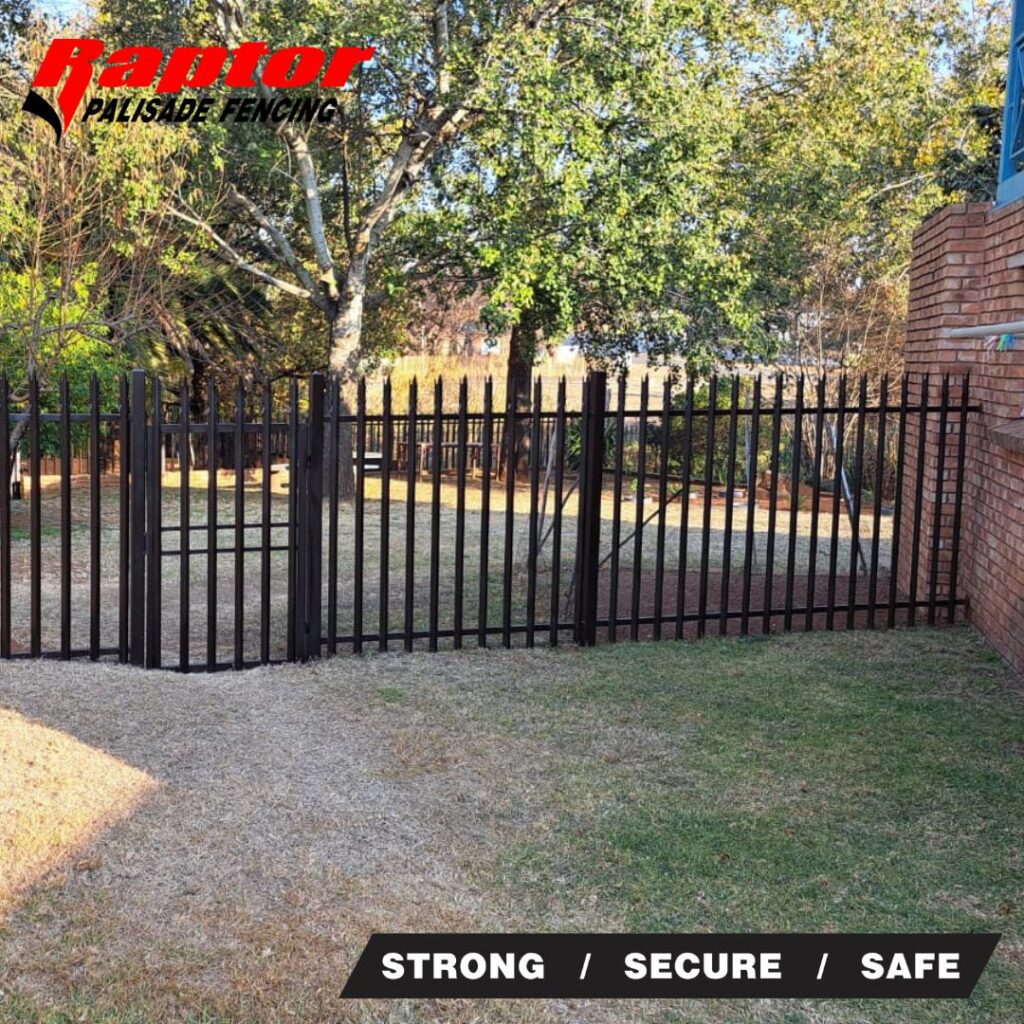


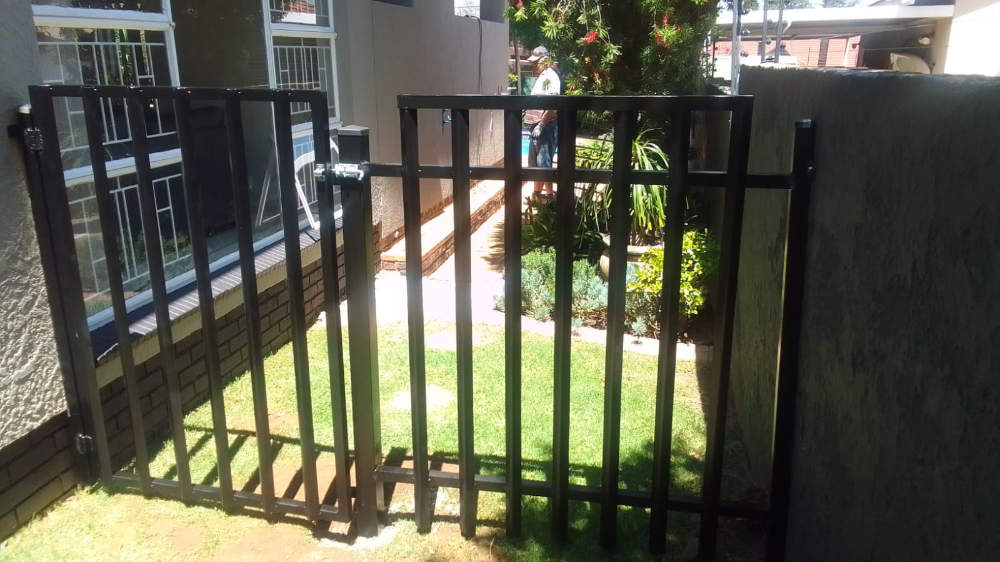
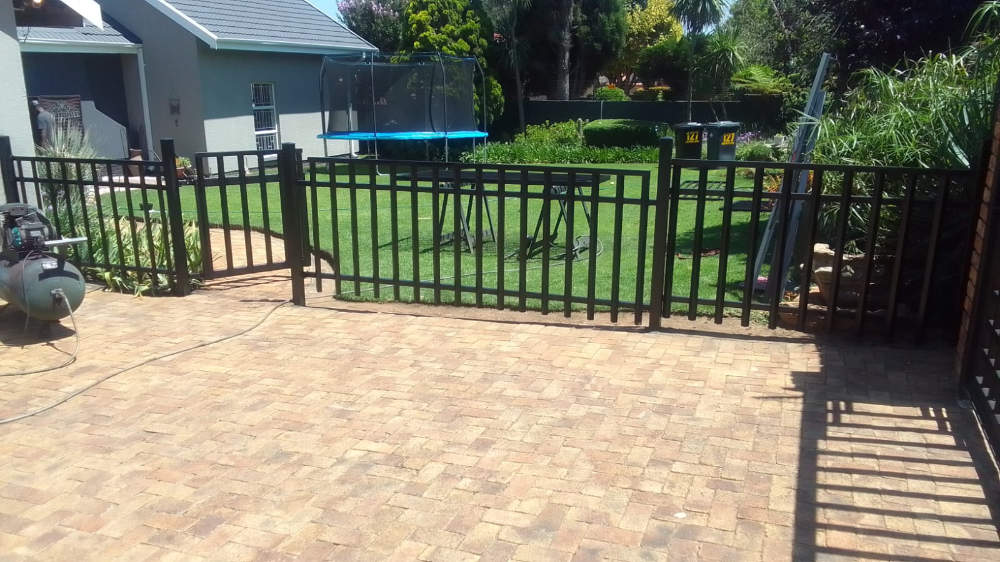
Where a Pedestrian Gate Matters Most
Homes — a side or back gate gives family members, staff, or delivery services access. They don’t need to open the main driveway gate every time.
Complexes and estates — dedicated pedestrian access points for residents and visitors, separate from vehicle entrances, help manage foot traffic. This happens without compromising overall site security.
Commercial and industrial sites — staff entrances see constant daily use, so they need gates built for that volume. Ideally, these integrate with access control systems for accountability.
In each case, the same principle applies: a pedestrian gate should match the security standard of the rest of the property.
Every Entry Point Needs the Same Standard
It’s easy to assume that a pedestrian gate matters less because it’s smaller. In practice, the opposite is often true. Intruders look for the path of least resistance. An unsecured side gate can undo the security value of a strong main gate and solid fencing elsewhere.
That’s why we recommend reviewing every access point on your property, not just the obvious ones. If your palisade fencing and main gate are secure but your side gate is an old, worn timber frame with a basic latch, that gate is now your weakest point.
How We Approach a Steel Pedestrian Gate Installation
- Site assessment — we look at where the gate sits, how often it’s used, and how it fits with your existing fencing and main gate.
- Specification — next, we recommend the right gate size, hinge and lock hardware, and finish for your needs.
- Fabrication — we custom-build the gate from heavy-duty steel and apply rust-resistant coating for long-term durability.
- Installation — our team fits the gate, tests the hinges and locking mechanism, and confirms smooth daily operation.
- Sign-off — finally, we walk through the finished gate with you to confirm it meets specification.
Frequently Asked Questions
Do pedestrian gates need to match the rest of my fencing? Yes, ideally. A mismatched gate can stand out as a weaker point in an otherwise secure perimeter. That’s why we design every steel pedestrian gate to match the finish and strength of your existing fencing.
Can a pedestrian gate be automated like a main gate? Yes. Depending on your needs, we can integrate electronic locks or access control systems into a pedestrian gate, similar to a motorised vehicle gate.
How often do pedestrian gates typically need maintenance? Because they see daily use, we recommend checking hinges and locking hardware periodically. A well-built steel gate with quality hardware needs minimal upkeep over its lifespan.
Are pedestrian gates suitable for complexes and estates? Yes. In fact, they’re especially useful there. They let residents and visitors move through foot access points without needing the main vehicle gate to open every time.
Can I get a sliding pedestrian gate instead of a swing gate? Yes. Where space is tight, a custom sliding pedestrian gate is often a better fit than a traditional swinging gate.
Let’s Secure Every Entry Point Properly
A strong perimeter is only as good as its weakest gate. If your pedestrian access points haven’t had the same attention as your main entrance, now’s the time to fix that.
Call Us Now for a Free Quote →